
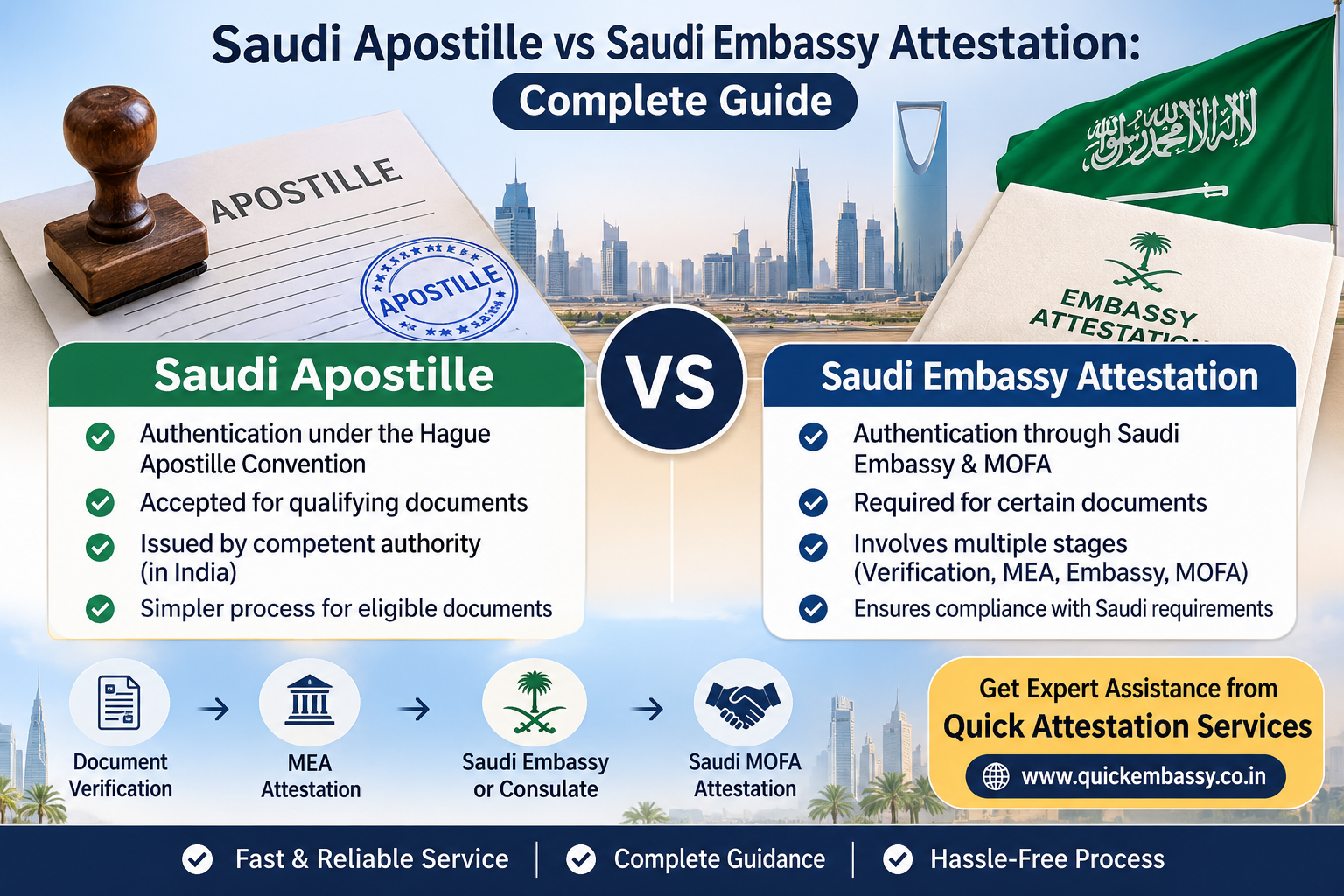
Saudi Apostille vs Saudi Embassy Attestation: Complete Guide
Saudi Apostille vs Saudi Embassy Attestation: Complete Guide
If you are planning to work, study, establish a business, or relocate to Saudi Arabia, document authentication may be an important part of your visa or official documentation process.
Many applicants are confused about the difference between Saudi Apostille and Saudi Embassy Attestation. Both procedures relate to document authentication, but the applicable process depends on the country where the document was issued, the destination country, and the purpose for which the document will be used.
Documents such as educational certificates, marriage certificates, birth certificates, experience certificates, Police Clearance Certificates (PCC), commercial invoices, and Power of Attorney may require authentication before they can be submitted to Saudi authorities or organizations.
Understanding the difference between apostille and embassy attestation can help applicants choose the appropriate process and avoid unnecessary documentation delays.
For professional document attestation assistance, visit Quick Attestation Services.
What Is Saudi Apostille?
A Saudi Apostille is an authentication certificate issued under the Hague Apostille Convention.
An apostille verifies the authenticity of the signature, the capacity of the person who signed the document, and the seal or stamp appearing on it.
It does not certify the actual contents of the document.
Saudi Arabia joined the Hague Apostille Convention, with its accession taking effect on 7 December 2024. This introduced an important change to the authentication process for qualifying documents exchanged between Saudi Arabia and other Convention member countries.
For eligible documents, apostille authentication can replace the traditional embassy legalization process.
However, applicants should understand that apostille requirements depend on the document's country of origin and the destination country's acceptance requirements.
What Is Saudi Embassy Attestation?
Saudi Embassy Attestation, also called Saudi Embassy Legalization, is a document authentication process completed through the Saudi diplomatic mission in the country where the document was issued.
It is generally associated with documents that require authentication for use in Saudi Arabia when the applicable legalization procedure requires diplomatic mission authentication.
The process may involve:
-
Document verification
-
Notary authentication, where required
-
State-level authentication
-
Ministry of External Affairs (MEA) authentication
-
Saudi Embassy or Consulate authentication
-
Saudi Ministry of Foreign Affairs (MOFA) authentication, where applicable
The exact procedure depends on the document category and current requirements.
Saudi Embassy Attestation is not automatically required for every document. Applicants should confirm whether their document qualifies for apostille or requires another authentication route.
Saudi Apostille vs Saudi Embassy Attestation: Key Differences
| Comparison | Saudi Apostille | Saudi Embassy Attestation |
|---|---|---|
| Purpose | Authentication under the Hague Apostille Convention | Authentication through the applicable diplomatic legalization process |
| Convention applicability | Used for qualifying documents between Convention member countries | May apply where apostille is not applicable or another legalization route is required |
| Authentication authority | Competent authority designated by the document's country of origin | Relevant Saudi Embassy or Consulate, where required |
| Document verification | Verifies signature, official capacity, and seal | Verifies document authentication according to diplomatic mission requirements |
| Additional legalization | Generally replaces further embassy legalization between Convention members | May require additional authentication or MOFA processing |
| Process | Depends on the issuing country's apostille procedure | Depends on the document, issuing country, and destination requirements |
| Document acceptance | Subject to Convention applicability and receiving authority requirements | Subject to Saudi authority and receiving organization requirements |
Important: Apostille and embassy attestation are not interchangeable in every situation. The correct process must be determined before submitting the original documents.
Is Saudi Apostille Accepted in Saudi Arabia?
Saudi Arabia's accession to the Hague Apostille Convention became effective on 7 December 2024.
For qualifying documents covered by the Convention, apostille authentication can replace the traditional diplomatic legalization chain.
However, applicants should not assume that every Indian document can simply receive an apostille and be accepted in Saudi Arabia.
The applicable process depends on:
-
The country where the document was issued
-
Whether the document qualifies as a public document under the Convention
-
Whether the issuing country and Saudi Arabia are covered by the Convention for the particular document
-
The authentication requirements of the issuing country
-
The requirements of the Saudi authority or organization receiving the document
Documents that do not qualify for apostille may still require another legalization procedure.
Saudi Apostille for Documents Issued in India
If your document was issued in India and you intend to use it in Saudi Arabia, you should first confirm the applicable authentication route.
India-issued documents may require preliminary verification depending on the document type and issuing authority.
Common document categories include:
Educational Documents
-
Degree certificates
-
Diploma certificates
-
10th and 12th certificates
-
Mark sheets
-
Technical certificates
-
Professional qualifications
Personal Documents
-
Birth certificates
-
Marriage certificates
-
Divorce certificates
-
Police Clearance Certificates
-
Medical certificates
-
Affidavits
Commercial Documents
-
Commercial invoices
-
Certificates of Origin
-
Power of Attorney
-
Company agreements
-
Certificates of Incorporation
-
Business documents
The requirements for educational, personal, and commercial documents can differ.
Saudi Apostille Process for Indian Documents
The procedure for documents issued in India depends on the document category and current authentication requirements.
A typical process may include the following stages.
Step 1: Check the Original Document
The original certificate or document should be reviewed before submission.
Check the following details:
-
Applicant's name
-
Certificate number
-
Issuing authority
-
Document date
-
Supporting information
Any discrepancy may require correction before authentication.
Step 2: Complete the Required Verification
Educational and personal documents may require verification by the relevant issuing authority or designated state-level authority.
Depending on the document, the applicable process may involve HRD, SDM, or another authorized authentication route.
The required procedure should be confirmed before proceeding.
Step 3: MEA Authentication or Apostille
The Ministry of External Affairs (MEA), Government of India, handles authentication and apostille services for eligible Indian documents.
The applicable MEA process depends on the document category and destination country requirements.
Applicants should confirm whether the document requires apostille or another authentication procedure.
Step 4: Confirm Saudi Acceptance Requirements
Before submitting the document to the receiving organization, verify the current Saudi requirements.
Depending on the document and purpose, additional authentication, translation, or other supporting documentation may be required.
Step 5: Submit the Document
Once the applicable authentication process is completed, the document can be submitted to the employer, university, government authority, or organization requesting it.
Keep copies of the authenticated document and supporting paperwork for your records.
Saudi Embassy Attestation Process from India
For documents that require the Saudi Embassy legalization route, the process may involve multiple authentication stages.
1. Document Verification
The original document is checked to confirm that it meets the requirements for authentication.
2. State-Level Authentication
Educational and personal documents may require authentication from the appropriate state authority or designated agency.
3. MEA Attestation
After the applicable preliminary verification, the document may be submitted for MEA authentication.
4. Saudi Embassy or Consulate Attestation
The document is processed through the relevant Saudi diplomatic mission when this stage is required.
5. Saudi MOFA Attestation
Further authentication through the Saudi Ministry of Foreign Affairs may be required depending on the document and its intended use.
Note: This is a general description of the traditional legalization route. Not every document requires every stage, and apostille may replace diplomatic legalization for qualifying documents under the Convention.
Which Documents Can Be Apostilled or Attested for Saudi Arabia?
1. Educational Certificate Attestation
Educational certificates may be required for employment, professional registration, or higher education.
Common documents include:
-
Degree certificates
-
Diploma certificates
-
School certificates
-
Mark sheets
-
Technical qualifications
-
Professional certificates
Applicants should confirm whether the employer or Saudi authority requires apostille, embassy legalization, or another authentication procedure.
2. Marriage Certificate Attestation
Marriage certificate authentication may be required for family visa or spouse-related official procedures.
The process depends on the issuing authority and applicable authentication requirements.
Applicants should ensure that the certificate details match the supporting documents.
3. Birth Certificate Attestation
Birth certificates may be required for family-related procedures, dependent applications, or other official requirements.
The certificate may need authentication through the appropriate authorities before it can be submitted.
4. Police Clearance Certificate Attestation
A Police Clearance Certificate may be required for employment, immigration, or other official purposes.
Applicants should confirm:
-
PCC issuing authority
-
Certificate validity
-
Required authentication
-
Destination authority requirements
5. Commercial Document Attestation
Commercial documents may require authentication for business operations, contracts, exports, or company registration.
Examples include:
-
Power of Attorney
-
Commercial invoices
-
Company agreements
-
Certificates of Origin
-
Business resolutions
-
Incorporation documents
Commercial documents may follow different authentication requirements from personal and educational certificates.
Saudi Apostille Fees
The cost of Saudi document apostille or authentication depends on the document and the applicable procedure.
Possible charges include:
-
Document verification fees
-
Notary charges, where applicable
-
State-level authentication charges
-
MEA-related charges
-
Apostille or legalization charges
-
Saudi Embassy charges, where applicable
-
Saudi MOFA charges, where applicable
-
Translation charges
-
Courier and document handling charges
There is no single universal fee applicable to every document.
Applicants should request a document-specific quotation before beginning the process.
Saudi Embassy Attestation Fees in India
Saudi Embassy Attestation fees depend on several factors.
These may include:
-
Type of document
-
Educational, personal, or commercial category
-
Number of documents
-
Issuing authority
-
Required verification
-
Applicable Embassy charges
-
MEA authentication
-
Saudi MOFA requirements
-
Courier and handling services
Before submitting original documents, confirm the total charges and the stages included in the service.
Saudi Apostille Processing Time
Processing time depends on the document category, issuing authority, and authentication requirements.
Documents requiring additional verification may take longer than documents that are ready for authentication.
Factors affecting processing time include:
-
Document type
-
Issuing authority
-
State-level verification
-
MEA processing
-
Apostille issuance
-
Translation requirements
-
Courier arrangements
Applicants should confirm the estimated timeline before starting the process, particularly when documents are needed for employment or visa applications.
Saudi Embassy Attestation Processing Time
The processing time for Saudi Embassy Attestation can vary according to the document and the number of authentication stages involved.
Documents requiring state verification, MEA authentication, Embassy processing, and MOFA authentication may take longer than documents requiring fewer stages.
Applicants should avoid relying on a single processing-time estimate for every certificate.
Common Mistakes to Avoid
Before submitting your documents for Saudi Apostille or Embassy Attestation, avoid these common mistakes:
-
Assuming apostille and Embassy Attestation are the same.
-
Submitting documents without checking the required authentication route.
-
Skipping required state-level verification.
-
Providing incomplete supporting documents.
-
Ignoring the issuing authority's requirements.
-
Assuming every certificate follows the same process.
-
Not confirming current fees and processing time.
-
Submitting documents without checking the receiving authority's requirements.
Correct document preparation can help reduce avoidable delays.
Why Choose Professional Saudi Attestation Services?
Professional assistance can help applicants understand the applicable document authentication procedure.
Services may include:
-
Document assessment
-
Authentication guidance
-
Verification coordination
-
Submission assistance
-
Status updates
-
Courier support
-
Document collection and delivery
-
Guidance on supporting documents
For assistance with Saudi document attestation, MEA authentication, educational certificate attestation, and personal or commercial documents, visit Quick Attestation Services.
Frequently Asked Questions
1. What is the difference between Saudi Apostille and Saudi Embassy Attestation?
Apostille is authentication under the Hague Apostille Convention. Embassy Attestation is part of a diplomatic legalization process where applicable. The correct procedure depends on the document's origin, destination, and acceptance requirements.
2. Is Saudi Arabia a member of the Apostille Convention?
Saudi Arabia's accession to the Hague Apostille Convention took effect on 7 December 2024.
3. Is Saudi Embassy Attestation still required?
For qualifying documents covered by the Convention, apostille can replace traditional embassy legalization. Other documents or circumstances may still require a different authentication procedure.
4. Can Indian documents be apostilled for Saudi Arabia?
Eligible Indian documents may be processed through the applicable apostille procedure. Applicants should verify the current requirements for their document and intended use.
5. Is MEA attestation required for Saudi documents?
The applicable MEA authentication or apostille procedure depends on the document category and destination requirements.
6. How much does Saudi Apostille cost?
The total cost depends on the document type, verification requirements, authentication charges, and additional services.
7. How long does Saudi Apostille take?
Processing time varies according to the document, issuing authority, verification requirements, and applicable authentication procedure.
8. Can educational certificates be attested for Saudi Arabia?
Yes. Educational certificates may be processed for authentication, subject to the applicable requirements.
9. Is Saudi MOFA attestation required after apostille?
For qualifying documents covered by the Convention, apostille generally replaces further legalization. However, applicants should confirm the receiving authority's requirements and whether any additional administrative steps apply.
10. Where can I get Saudi attestation assistance in India?
You can visit Quick Attestation Services for information and assistance with document attestation and authentication services.
Conclusion
Understanding Saudi Apostille vs Saudi Embassy Attestation is important when preparing documents for employment, education, family visa, business, or official procedures in Saudi Arabia.
Apostille authentication applies to qualifying documents under the Hague Apostille Convention and can replace traditional diplomatic legalization. Embassy Attestation may still be relevant when the document or destination requirements call for a different legalization process.
The correct procedure depends on the country where the document was issued, the type of document, the destination, and the receiving authority's requirements.
Before submitting your original documents, confirm the applicable authentication process, supporting documents, fees, and processing time.
For professional assistance with Saudi Apostille, Saudi Embassy Attestation, MEA Attestation, and document authentication, visit Quick Attestation Services.
Disclaimer: Authentication requirements, fees, processing times, and acceptance rules may change. Always verify the latest requirements with

Saudi Embassy Attestation Time & Charges in India | Complete Guide
Find Saudi Embassy attestation time and charges in India. Learn the complete process, required documents, fees, MEA authentication, processing time, and certificate attestation services.

Saudi Embassy Attestation for PCC in India | Process & Fees
Saudi Embassy Attestation for PCC in India: Complete Process, Documents, Fees & Time
Are you planning to travel to Saudi Arabia for employment, a work visa, residency, or another official purpose? You may be asked to submit a Police Clearance Certificate (PCC) as part of your documentation process. Depending on the requirements of your employer or the concerned Saudi authority, the certificate may need additional authentication before it can be accepted.
Saudi Embassy Attestation for PCC is a document authentication service that helps applicants prepare their Police Clearance Certificate for official use in Saudi Arabia, subject to the applicable requirements.
A Police Clearance Certificate generally provides information about an individual's criminal record status as maintained by the issuing authority. The authentication process helps establish the validity of the document for use abroad.
The process may involve verification by the issuing authority, applicable authentication through Indian authorities, Ministry of External Affairs (MEA) authentication, and Saudi Embassy or Consulate processing, depending on the current requirements.
Quick Attestation Services Pvt. Ltd. provides assistance with document attestation and authentication services. Applicants should confirm the exact requirements for their PCC before submitting their original documents.
What Is Saudi Embassy Attestation for PCC?
Saudi Embassy Attestation for PCC refers to the applicable authentication process for a Police Clearance Certificate intended for use in Saudi Arabia.
A PCC may be requested by an employer, recruitment agency, government authority, or another organization as part of an employment or official documentation procedure.
Before the certificate can be used, the receiving authority may require authentication through the relevant Indian authorities and the Saudi diplomatic mission.
The exact procedure depends on factors such as:
-
The authority that issued the PCC
-
The purpose for which the certificate will be used
-
The current requirements of the Saudi Embassy or Consulate
-
The authentication route applicable to the document
-
Any additional requirements communicated by the receiving organization
Applicants should verify the applicable process before arranging attestation.
Why Is PCC Attestation Required for Saudi Arabia?
A Police Clearance Certificate may be required for different official purposes in Saudi Arabia. Whether attestation is necessary depends on the specific application and the instructions provided by the concerned authority.
1. Employment in Saudi Arabia
Employers may request a PCC during recruitment or employment documentation, depending on the job and applicable regulations.
2. Work Visa Documentation
Some applicants may need police clearance documentation as part of their employment-related or visa procedures. The requirements should be confirmed with the relevant authority.
3. Residency and Official Procedures
A PCC may be requested for certain residency-related or administrative purposes, depending on the applicant's circumstances.
4. Employer or Organization Requirements
Some employers and organizations have specific document verification procedures. Applicants should confirm whether an attested PCC is required before submitting it.
Saudi Embassy Attestation for PCC: Complete Process
The authentication process should be confirmed before submission because the required stages can vary according to the document and its intended use.
Step 1: Obtain Your Police Clearance Certificate
First, obtain a valid PCC from the appropriate issuing authority.
Ensure that the certificate contains the required information and that the personal details match your passport and other supporting documents wherever applicable.
Step 2: Verify the PCC Requirements
Before beginning the attestation process, check the requirements communicated by your employer, recruitment agency, or receiving authority in Saudi Arabia.
Confirm whether the original PCC is required, whether a particular issuing authority is specified, and which authentication stages must be completed.
Step 3: Complete Applicable Preliminary Verification
Depending on the issuing authority and the applicable procedure, the PCC may require verification or authentication before it can be submitted for further processing.
The exact requirements should be checked for your particular certificate.
Step 4: MEA Attestation
The Ministry of External Affairs (MEA), Government of India, handles document authentication for international use through the applicable procedures.
Where required, the PCC must complete the prescribed preliminary authentication before MEA processing.
Applicants should confirm the appropriate route for their PCC rather than assuming that every Police Clearance Certificate follows the same process.
Step 5: Saudi Embassy or Consulate Attestation
If Saudi diplomatic mission attestation is required, the document can be processed through the applicable Saudi Embassy or Consulate procedure after completion of the necessary preceding stages.
The current requirements, document format, and submission procedure should be verified before submitting the certificate.
Step 6: Final Document Collection and Verification
Once processing is complete, check the document and any authentication markings carefully.
Make sure the document is ready for submission to the employer or authority that requested it. Additional requirements may apply depending on the intended use in Saudi Arabia.
Documents Required for Saudi PCC Attestation
The required documents may vary according to the PCC issuing authority and the current Saudi authentication procedure.
Applicants may generally be asked to provide:
-
Original Police Clearance Certificate
-
Clear copy of the applicant's passport
-
Supporting identification documents, if required
-
Additional verification documents, where applicable
-
Authorization letter, if a representative is submitting documents on the applicant's behalf
-
Any additional documents requested by the concerned authority
Important: Confirm the document checklist before submission. Do not send original documents until the service provider has explained the applicable process and document-handling arrangements.
Saudi Embassy Attestation for PCC Fees
The cost of Saudi Embassy Attestation for PCC depends on the applicable authentication stages and service requirements.
Factors affecting the total charges may include:
-
PCC issuing authority
-
Preliminary verification requirements
-
MEA authentication
-
Saudi Embassy or Consulate processing charges
-
Service provider fees
-
Courier, pickup, and delivery charges
-
Additional documentation or verification requirements
There is no single fee that applies to every PCC attestation case. Request a detailed quotation before proceeding so you understand the applicable charges.
For document-specific assistance, visit Quick Attestation Services.
Saudi PCC Attestation Processing Time
The processing time for Saudi PCC attestation depends on the issuing authority, verification requirements, and the authentication stages involved.
Possible factors affecting the timeline include:
-
Time required to verify the PCC
-
Preliminary authentication requirements
-
MEA processing time
-
Saudi Embassy or Consulate processing
-
Public holidays and submission schedules
-
Courier and document delivery time
Documents requiring additional verification may take longer to process. Therefore, applicants should obtain a current estimated timeline before submitting their PCC.
If you have a joining date or visa documentation deadline, start checking the requirements early and allow sufficient time for processing.
Difference Between PCC Issuance and PCC Attestation
PCC issuance and PCC attestation are two different procedures.
PCC issuance: The relevant authority issues the Police Clearance Certificate after following its prescribed procedure.
PCC attestation: The applicable authorities authenticate the document for the intended use abroad, where required.
Obtaining a PCC does not automatically mean that all authentication requirements have been completed. Always confirm whether the receiving authority requires additional attestation.
Common Reasons for Delays in Saudi PCC Attestation
Applicants can reduce avoidable delays by checking their documents before submission.
Common issues include:
-
Submitting an incorrect or incomplete PCC.
-
Providing unclear passport copies.
-
Differences in personal details across documents.
-
Missing supporting documentation.
-
Not completing a required preliminary authentication stage.
-
Following an outdated attestation procedure.
-
Waiting until the last minute before an employment or visa deadline.
Review the requirements carefully and confirm the current procedure before starting the process.
Why Choose Quick Attestation Services for Saudi PCC Attestation?
Choosing a professional document attestation service can make the process easier to understand, particularly when several authentication stages are involved.
Quick Attestation Services Pvt. Ltd. can assist applicants with understanding document requirements and navigating the applicable attestation process.
Potential service support includes:
-
Guidance on document requirements
-
Preliminary document checking
-
Assistance with applicable authentication stages
-
Information about estimated processing time
-
Fee quotations based on document requirements
-
Submission and courier guidance, where available
-
Updates regarding the service process
The exact services available depend on the document and current requirements.
For assistance, visit the official website: https://www.quickembassy.co.in/.
Checklist Before Submitting Your PCC for Saudi Attestation
Before starting the process, make sure you have:
-
Obtained the PCC from the appropriate issuing authority.
-
Checked that the personal details are correct.
-
Confirmed whether the original certificate is required.
-
Prepared a clear passport copy.
-
Verified the applicable authentication stages.
-
Confirmed whether MEA authentication is required.
-
Checked Saudi Embassy or Consulate requirements.
-
Obtained a quotation for the applicable fees.
-
Confirmed the estimated processing time.
-
Allowed sufficient time before your employment or documentation deadline.
Frequently Asked Questions About Saudi Embassy Attestation for PCC
1. What is Saudi Embassy Attestation for PCC?
It is the applicable authentication process for a Police Clearance Certificate intended for official use in Saudi Arabia, where required by the receiving authority.
2. Is MEA attestation required for Saudi PCC attestation?
The required authentication route depends on the PCC, the issuing authority, and current Saudi requirements. Confirm whether MEA authentication is required for your specific document.
3. What documents are required for Saudi PCC attestation?
Commonly requested documents include the original PCC and a passport copy. Additional documents may be required depending on the issuing authority and authentication procedure.
4. How much does Saudi PCC attestation cost in India?
The cost depends on the required authentication stages, applicable charges, service fees, and courier arrangements. Request a current quotation for your document.
5. How long does Saudi PCC attestation take?
Processing time varies according to document verification, the authorities involved, and current processing schedules. Confirm the estimated timeline before submission.
6. Can I use my Indian PCC in Saudi Arabia without attestation?
Whether attestation is required depends on the receiving authority and the purpose for which the PCC will be used. Check the current requirements before submitting your certificate.
7. Can I apply for Saudi PCC attestation from Delhi?
Applicants in Delhi can seek assistance from document attestation service providers. The applicable procedure depends on the PCC and current authentication requirements.
8. Can a service provider handle PCC attestation on my behalf?
A service provider may assist with document preparation and submission where permitted by the applicable procedure. Confirm authorization requirements and document-handling arrangements before proceeding.
Conclusion
Saudi Embassy Attestation for PCC can be an important part of preparing police clearance documentation for official use in Saudi Arabia when authentication is required.
The process depends on the PCC issuing authority, the purpose of use, and the latest authentication requirements. Applicants should confirm the document checklist, applicable MEA and Saudi Embassy procedures, processing time, and total charges before submitting their certificates.
For assistance with Saudi PCC attestation, document authentication, and other certificate attestation requirements, visit Quick Attestation Services Pvt. Ltd..
Get your PCC requirements checked before starting the process to help avoid unnecessary delays.
Disclaimer: Authentication requirements, charges, and processing times may change. This article provides general information and does not guarantee acceptance of a document or a particular processing timeline. Always confirm the current requirements with the relevant authorities or the organization requesting the PCC.

Saudi Embassy Attestation for Marriage Certificate in India
Learn the Saudi Embassy attestation process for marriage certificates in India, including required documents, MEA authentication, fees, processing time, and MOFA attestation for Saudi Arabia.

Saudi Embassy Attestation for Degree Certificate in India | Process & Fees
Learn the complete process for Saudi Embassy Attestation for Degree Certificate from India, including required documents, MEA attestation, Saudi Embassy attestation, fees, processing time and MOFA requirements.
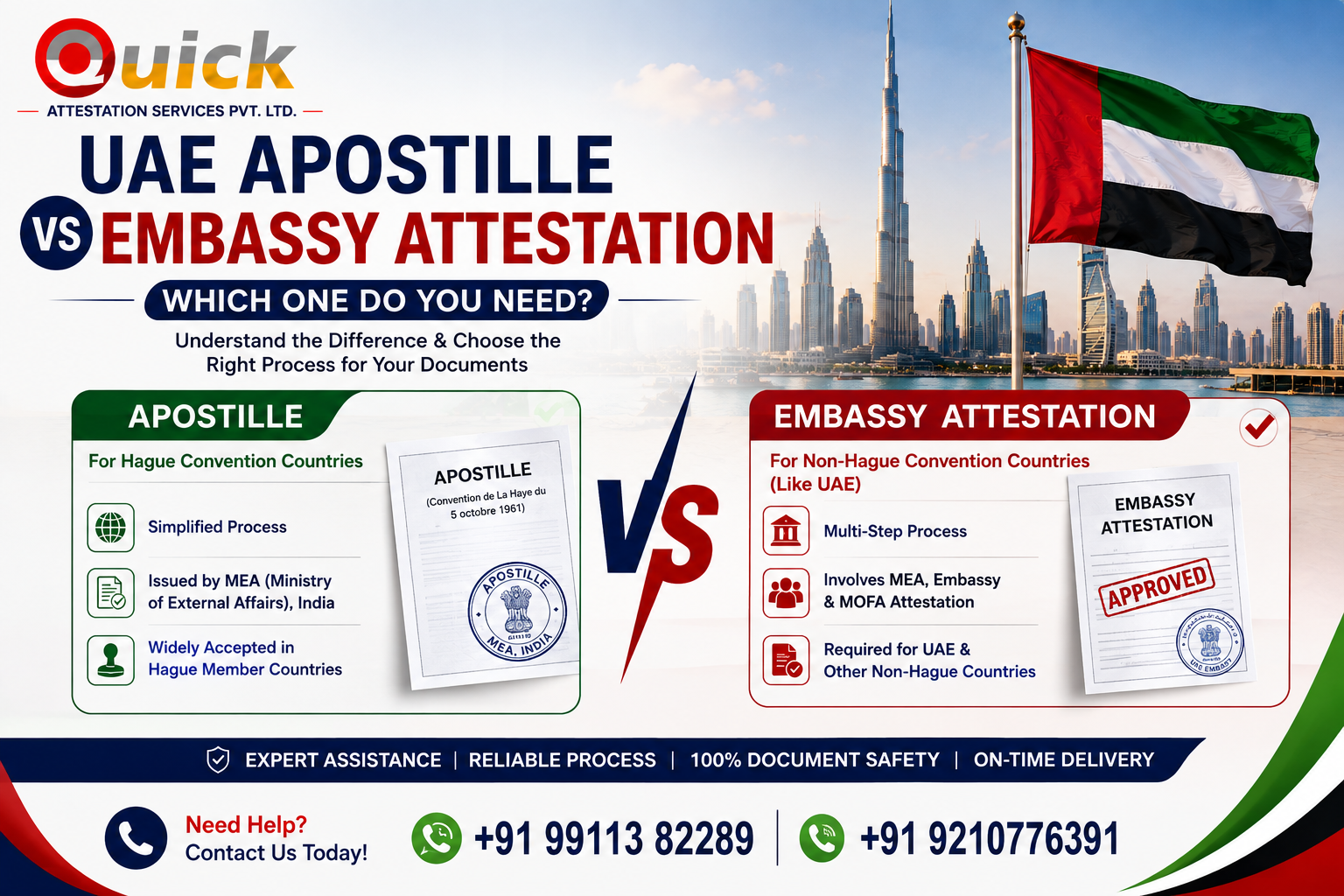
UAE Apostille vs Embassy Attestation: Which One Do You Need?
Confused between UAE Apostille and Embassy Attestation? Learn the key differences, required documents, process, fees, processing time, and which authentication method you may need for the UAE.
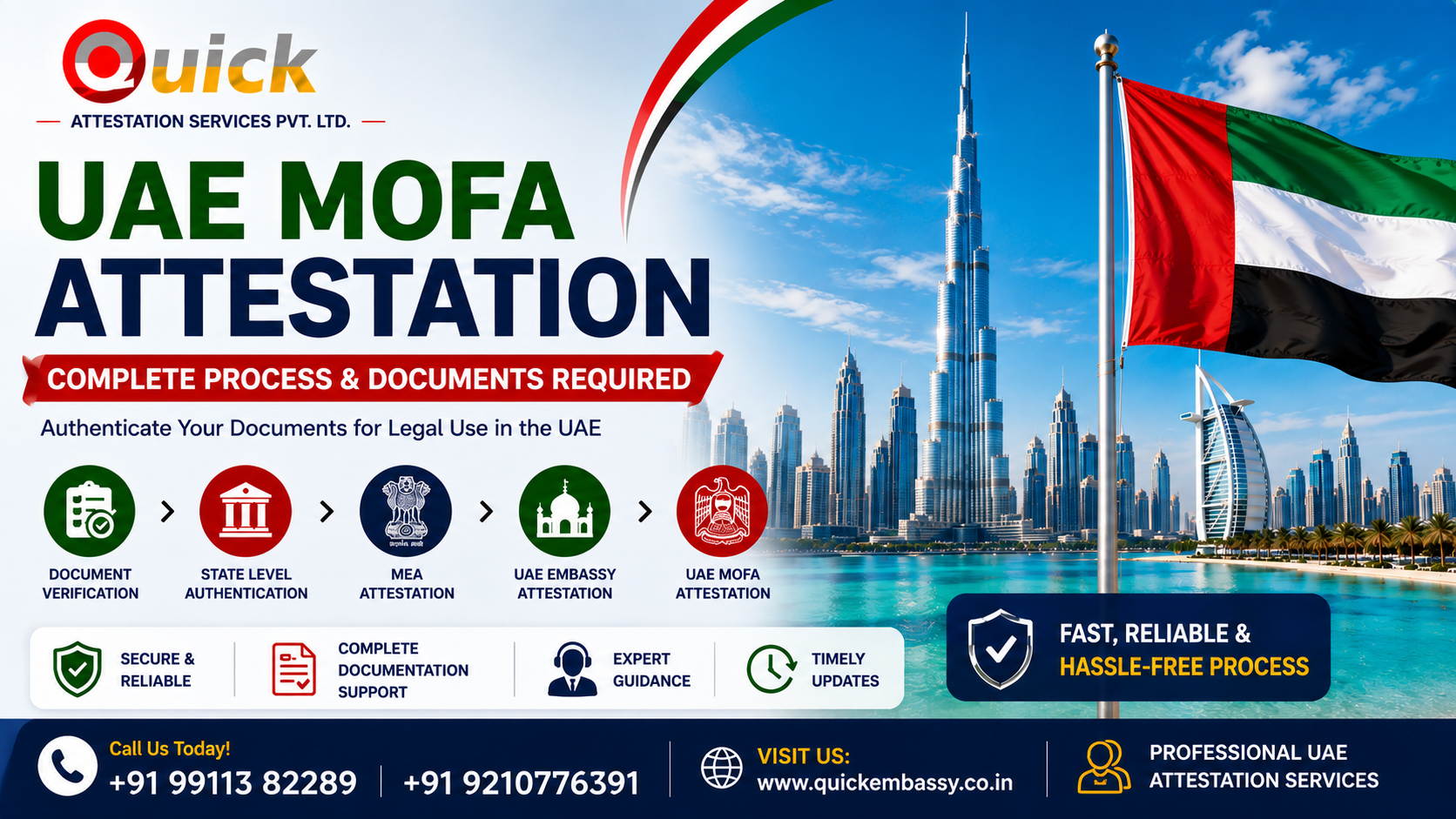
UAE MOFA Attestation: Complete Process, Documents, Fees & Time
Learn the complete UAE MOFA Attestation process, required documents, fees, processing time, and important requirements for attesting Indian certificates and documents for use in the UAE.

UAE Embassy Attestation for PCC: Process, Fees & Requirements
Learn the complete UAE Embassy Attestation process for PCC, including required documents, verification, MEA attestation, UAE Embassy attestation, fees, processing time, and MOFA requirements.

UAE Embassy Attestation for Marriage Certificate: Process, Documents, Fees & Time
Learn the complete UAE Embassy Attestation process for marriage certificates, including required documents, verification, MEA attestation, UAE Embassy attestation, MOFA requirements, fees, and processing time.

UAE Embassy Attestation for Marriage Certificate: Process, Documents, Fees & Time
Learn the complete UAE Embassy Attestation process for marriage certificates, including required documents, verification, MEA attestation, UAE Embassy attestation, MOFA requirements, fees, and processing time.

UAE Embassy Attestation for Birth Certificate: Process & Requirements
Planning to use your birth certificate in the UAE? This complete guide explains the UAE Embassy Attestation process, required documents, verification, MEA attestation, UAE Embassy attestation, MOFA requirements, fees, and processing time.
For professional assistance, visit Quick Attestation Services.

UAE Embassy Attestation for Degree Certificate: Complete Guide
Learn about UAE Embassy attestation for degree certificates, including the required documents, attestation process, verification steps, and important requirements for using educational certificates in the UAE.
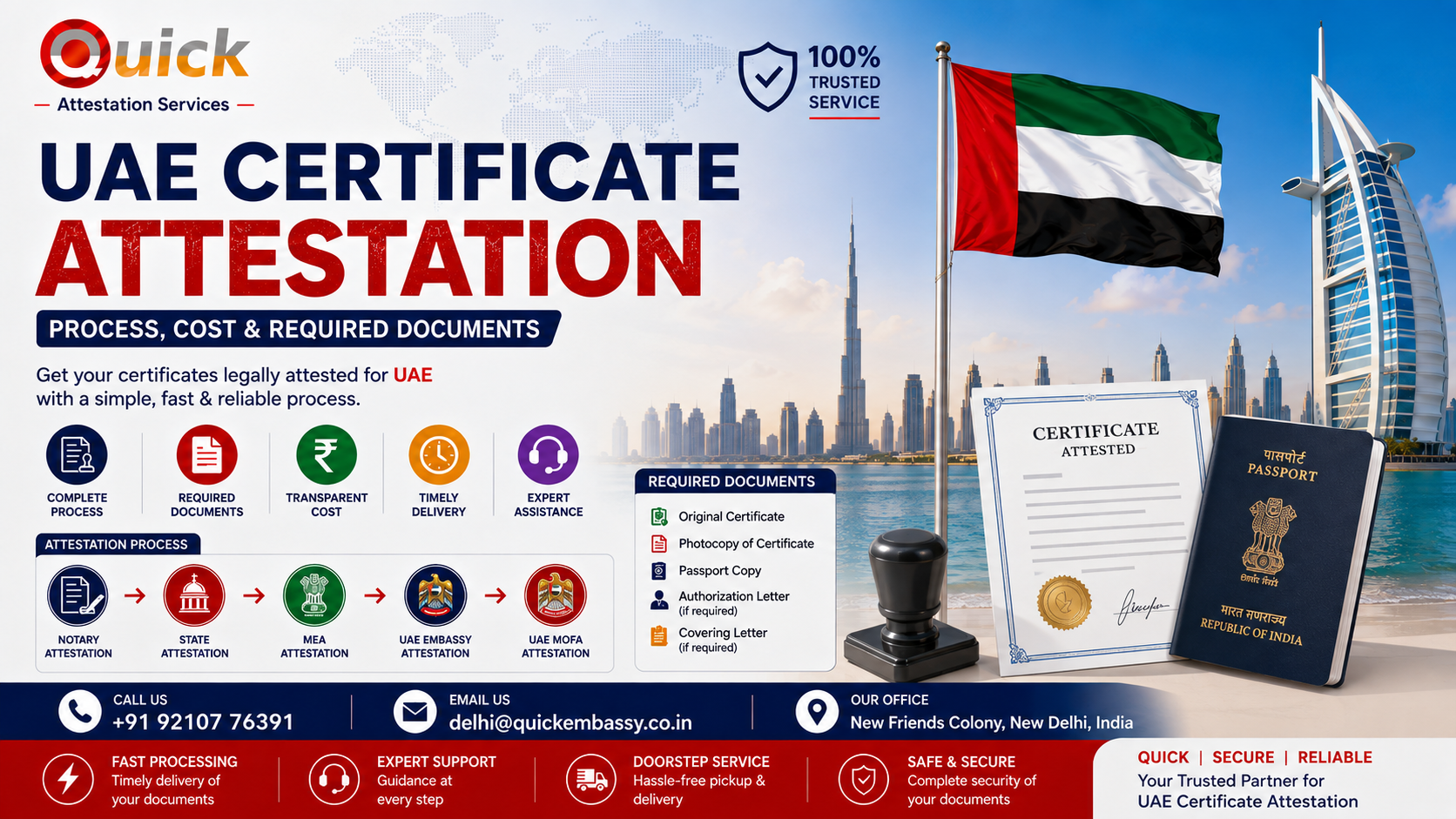
UAE Certificate Attestation: Process, Cost & Required Documents
Learn about the UAE certificate attestation process in India, including required documents, attestation steps, estimated costs, processing time, and important requirements for employment, education, family visas, and other purposes.

UAE Embassy Attestation in India: Step-by-Step Guide, Documents, Fees & Time
Planning to use your documents in the UAE? Learn the step-by-step UAE Embassy Attestation process in India, including required documents, fees, processing time, MEA attestation, and MOFA requirements.
UAE Embassy Attestation: Complete Process, Documents, Fees & Time
Get complete guidance on UAE Embassy Attestation, including the process, required documents, fees, processing time, MEA attestation, and MOFA requirements. Quick Attestation Services provides professional assistance for smooth and reliable document attestation.